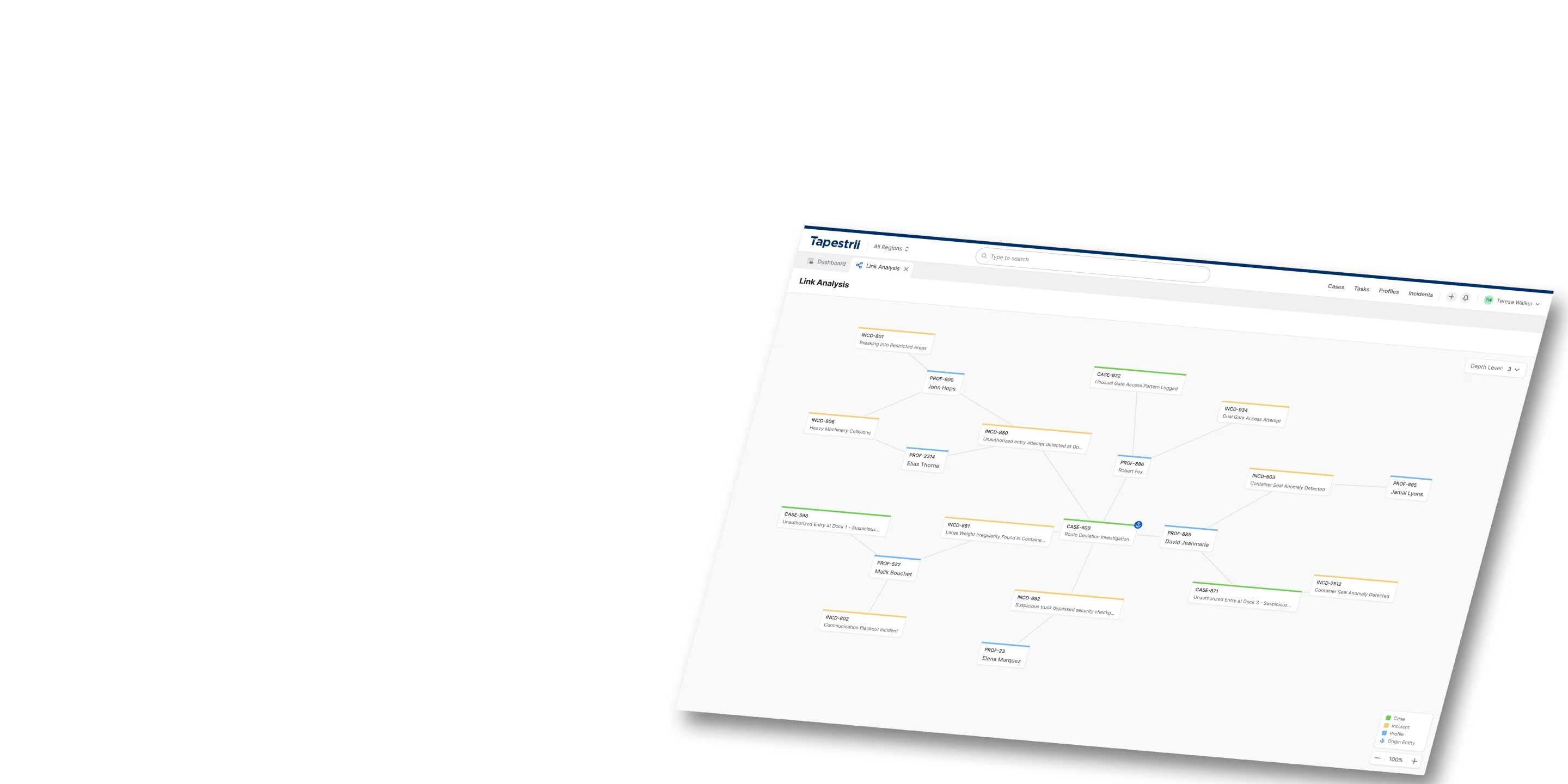
Reveal meaningful relationships using visual graphs and intelligent clustering, to surface behaviors and patterns.
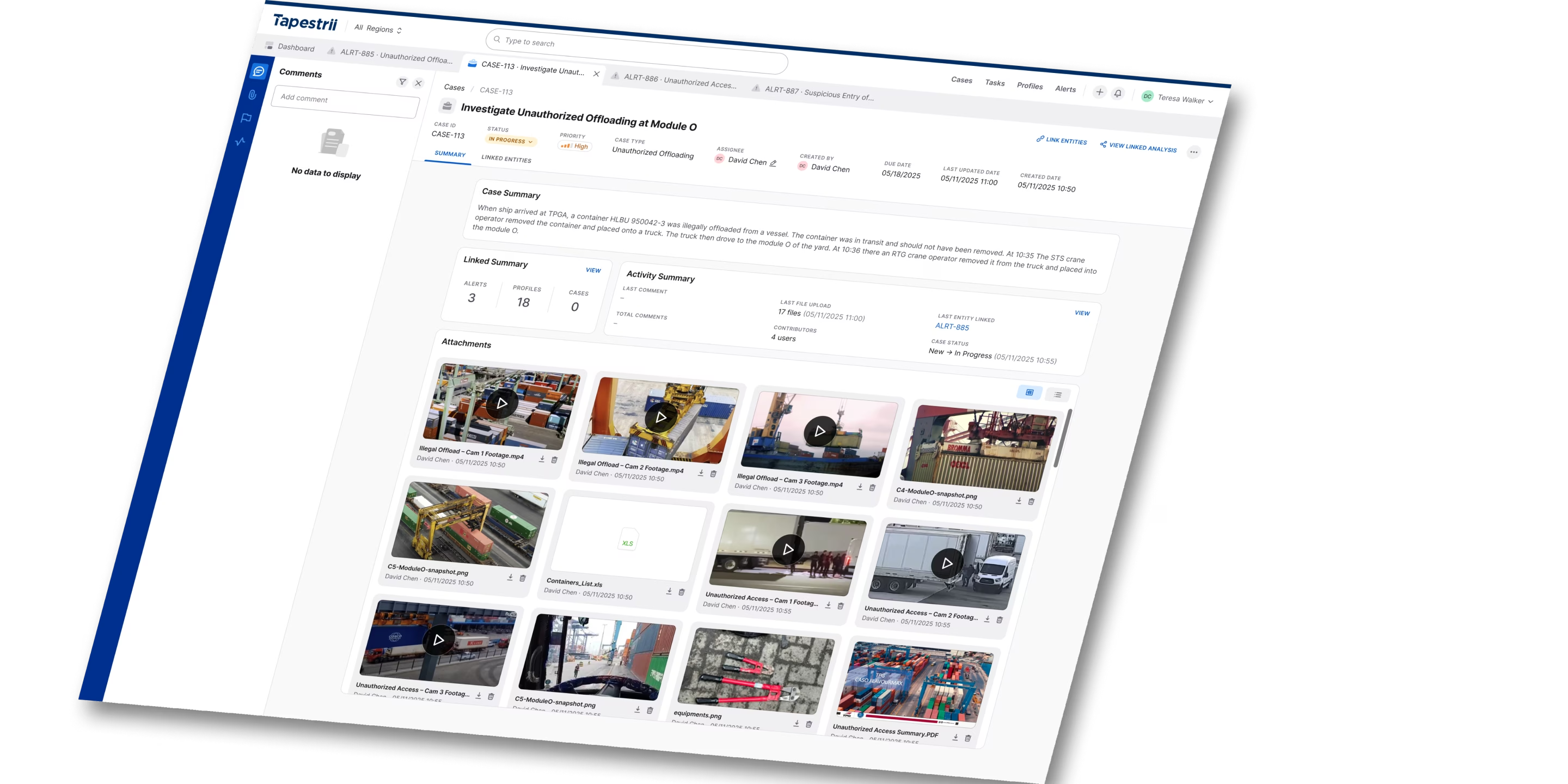
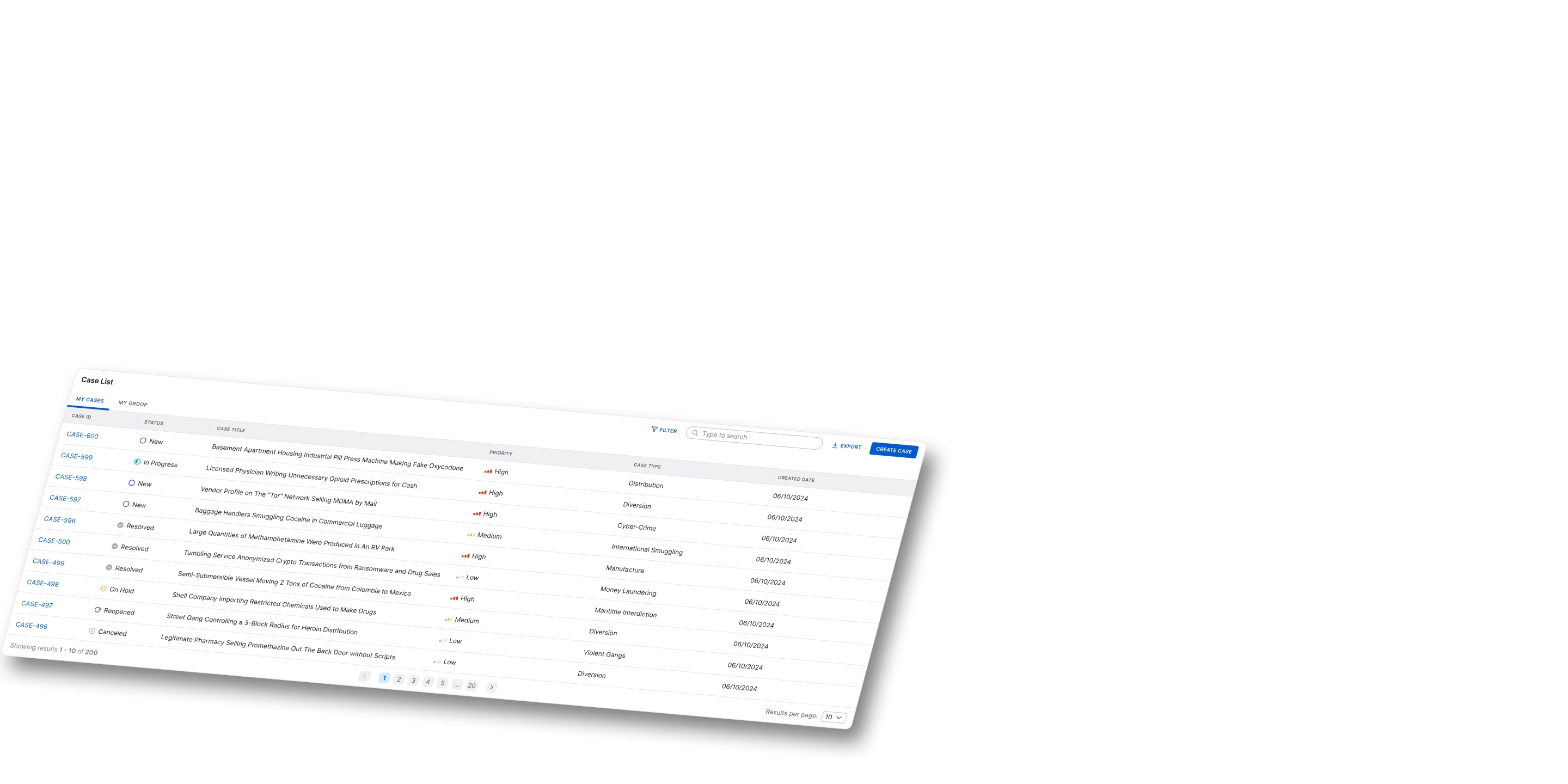
Structured case creation with timelines, comments, attachments, supervisor review, and exportable reports.
Rich profiles for people or entities with linked incidents, cases, and connections that reveal hidden networks.
Capture, review, and prioritize signals with dynamic forms, attachments, activity logs, and real-time notifications.
Search across cases, incidents, profiles, comments, attachments, and notifications; surfacing critical connections instantly.
One Platform. Infinite Possibilities.
Reduce friction across intake, review, linking, and response for faster operational resolution.
Search, link analysis, pattern recognition, and clustering help teams move beyond isolated events; revealing trends, recurring behaviors, and priority risks that deserve attention.
Flexible data structures, multilingual support, and multi-site capabilities grow with your organization.
RBAC+, ABAC, full audit logs, encrypted cloud hosting, Zero Trust alignment, SSAE 18 SOC 2, PCI-DSS Level 1, CMMC.
A responsive interface and adaptable workflows let teams mold the system to their operation, not the other way around.
Use Cases That Fit Every Operational Environment

Maintain visibility across teams, sites, and workflows.

Reveal patterns across people, events, and operational signals.

Align teams through structured workflows and shared insight.

Create complete, defensible records for internal or external review.
Insights that guide action.
.jpg)
Discover why organizations trust ICM to power operational intelligence and transform fragmented data into actionable insight.
“In port investigations, the biggest challenge isn’t a lack of data, it’s that the data lives across disconnected systems. ICM by Tapestrii is a game changer as it allows investigators to connect to the various systems in a port, pull in data, review past incidents and alerts, view CCTV footage, and then connect that data to give analysts insight into internal conspiracies. This ability to unify and analyze data across multiple systems transforms fragmented information into connected intelligence, enabling investigators to identify patterns and coordinated threats across operations. It is a cutting-edge tool that any investigator would want at their disposal.”
“We are very satisfied with Tapestrii. It has simplified several processes for searching and connecting security events, while also serving as a useful incident repository we review daily. The greatest benefit is that when I look up an entity or profile, I can immediately see every past event it was involved in.”
“Our experience with Tapestrii has been positive. It has given us better organization and greater visibility into our processes, and helped us optimize our workflow, especially around centralizing information and tracking activities. Tapestrii has made everything better.”
ICM is an investigative case management platform purpose-built for port operators and HSE or security teams who need to consolidate fragmented incident, personnel, and intelligence data into a unified workflow.
Instead of relying on disconnected systems, spreadsheets, and informal communication, teams using ICM can investigate incidents, identify patterns, and maintain operational oversight from a single platform.
Investigative case management is the process of documenting incidents, collecting evidence, analyzing related entities, and coordinating investigations across teams.
ICM provides a structured system where incidents, people, organizations, and intelligence can be connected within a single case record. This creates a clear investigative timeline and audit trail purpose-built for port and terminal environments.
EHS and incident reporting tools are built to log events and close compliance checklists. ICM is built for investigation and operational decision-making. The difference is structural, key differences include:
Traditional investigative platforms are often complex, expensive, and built for trained intelligence analysts. They carry the complexity, cost, and configuration overhead that comes with that design assumption.
ICM is designed for operational teams: safety managers, HSE leaders, and security personnel who need to run structured investigations as part of daily operations, not as a specialized function. The platform supports the same investigative rigor without requiring analyst training or enterprise implementation cycles.
ICM can ingest and organize multiple operational data sources including:
This allows organizations to consolidate information that would otherwise remain siloed across systems.
ICM is fully configurable and can work either way. For some organizations, ICM serves as a coordination and investigation layer above existing systems, connecting and contextualizing information from tools already in use. For others, it replaces legacy systems entirely. The ICM team works with each organization to determine the deployment approach that best fits their operational needs and existing infrastructure.
Yes. ICM allows investigations to be conducted within the platform without notifying employees or contractors.
This allows teams to review incidents, analyze information, and build investigative context while minimizing the risk of alerting potential bad actors.
ICM reduces risk by connecting data that is often fragmented across systems. Specific outcomes include:
ICM is used by operational and security professionals in port and logistics environments, including:
These roles rely on ICM by Tapestrii to coordinate incidents, investigations, and operational oversight across their organizations.
Yes. ICM is designed to support organizations operating across multiple terminals or locations.
Permissions and data access can be structured by location while maintaining centralized oversight across the entire operation.
Yes. ICM integrates with external systems including access control platforms, CCTV systems, video management systems, and external data sources through APIs and data integrations.
These integrations allow operational data to be included directly within investigations and case records, giving investigators a complete picture without switching between platforms.
Most organizations go live with ICM within a few weeks, depending on integration scope and deployment complexity.
Teams often start with a single operational group and expand usage across departments or locations as adoption grows.
ICM allows organizations to configure case types, workflows, fields, and investigation processes.
This flexibility allows the platform to align with existing operational procedures instead of forcing teams to change how they work.
ICM is best suited for:
ICM is available as a cloud-based platform, allowing teams to access investigations and case records securely from any location.
Organizations with specific infrastructure requirements can discuss deployment options with the ICM by Tapestrii team.
Yes. ICM maintains a complete audit trail for every case, including documentation of actions taken, decisions made, and evidence collected.
This supports compliance workflows and provides defensible records for internal reviews, regulatory inquiries, or legal proceedings.
This includes support for obligations under the ISPS Code, where port facilities are required to document security incidents, maintain security logs, and demonstrate that threats were assessed and responded to appropriately
ICM includes role-based access controls that allow organizations to define who can view, edit, or manage specific cases and records.
Permissions can be configured at the user, role, or location level, ensuring sensitive investigations remain accessible only to authorized personnel.
Ports often rely on a mix of incident reporting tools, spreadsheets, and internal databases to document security events. While these tools capture basic information, they are not designed to support structured investigations or connect related incidents over time.
ICM is purpose-built as a dedicated investigative case management platform for ports and terminals. It allows teams to track incidents, link related entities, analyze patterns, and maintain a complete investigative record in one place.
Many ports manage incidents using separate systems for safety reporting, access control, and operational records. This makes investigations difficult because relevant information is scattered across multiple platforms.
ICM centralizes these inputs into a single case record, allowing investigators to connect incidents, people, locations, and external intelligence sources. This helps teams build a complete picture of what happened and coordinate response efforts more effectively.
Schedule a demo and discover how we can drive real impact for your business.